About this book
The big picture.
Author
This series draws from the Gospels of Matthew and Luke, two accounts of Jesus' life written from different perspectives. Matthew, one of Jesus' twelve disciples, emphasizes Jesus as the promised Messiah and fulfillment of prophecy. Luke, a doctor and companion of Paul, investigated the events surrounding Jesus' life to present an orderly account of His ministry.
Audience
Matthew wrote primarily for Jewish readers, showing how Jesus fulfilled the promises God made to Israel. Luke wrote to Theophilus and a broader audience that included Gentiles, emphasizing that Jesus came to bring salvation to all people.
Date
Matthew and Luke were likely written between AD 60 and 90. Both Gospels describe events surrounding Jesus' birth in the final years of Herod the Great's reign (6–4 BC).
Genre
Both books belong to the Gospel genre, narratives that recount the life, teaching, death, and resurrection of Jesus.
Purpose
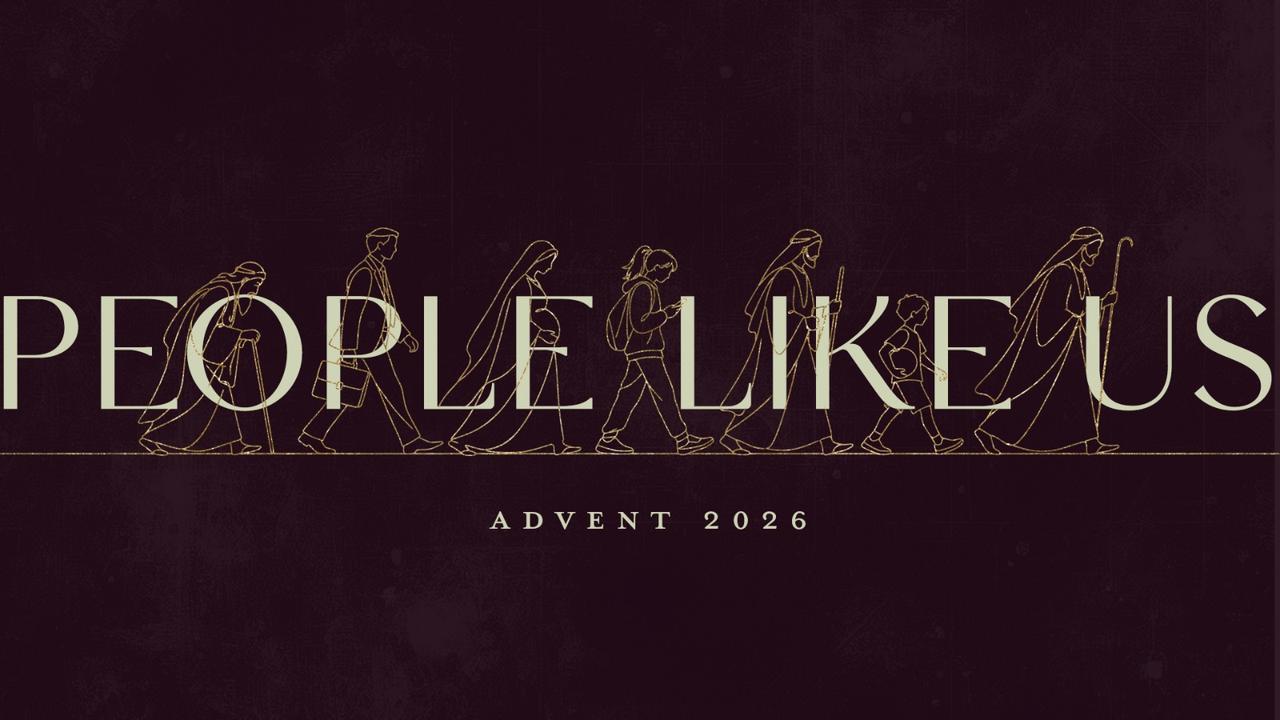
This series explores the first Christmas through the eyes of ordinary people facing struggles much like our own. Through their stories, we discover who Jesus is and how His arrival brings hope to people who are waiting, hurting, uncertain, or wondering if they matter.
Sermon discussion guide
Go deeper this week.
Use these questions on your own, with your family, or with your group.
Week 1: Simeon WaitsLuke 2:22-35 · November 29, 2026
- Read Luke 2:22–35 and/or recap this week's sermon. What does Simeon's response to seeing Jesus reveal about his faith in God's promises?
- Why is waiting on God so difficult? Would anyone like to share about a current season of waiting?
- How does waiting shape our view of God?
- Simeon remained faithful while he waited. What does it look like to keep trusting and following God when nothing seems to be changing?
Week 2: Mary Believes the ImpossibleLuke 1:26–38, 45 · December 6, 2026
- Read Luke 1:26–38, 45 and/or recap this week's sermon. What stands out to you about Mary's response to the angel's announcement?
- Mary had questions about how God's plan could possibly unfold. What's the difference between asking God honest questions and refusing to trust Him?
- Why do you think we're often more convinced by what we can see in front of us than by what God has promised?
- Where in your life are you facing something that feels impossible? What might it look like to trust God even when you can't see how things will work out?
Week 3: Joseph Trusts Through UncertaintyMatthew 1:18-25 · December 13, 2026
- Read Matthew 1:18–25 and/or recap this week's sermon. What does Joseph's response to Mary's pregnancy and the angel's message reveal about his character and faith?
- Joseph's life took a turn he never expected. How do you typically respond when your plans fall apart or life doesn't go the way you imagined?
- Before Joseph understood the full story, he chose to treat Mary with kindness. Why is it difficult to respond with grace when we feel hurt, confused, or wronged?
- Jesus is called Immanuel, meaning "God with us." How does knowing God is with us change the way we face painful or uncertain circumstances?
Week 4: The Shepherds Encounter GloryLuke 2:8-20 · December 20, 2026
- Read Luke 2:8–20 and/or recap this week's sermon. What stands out to you about God's decision to announce the birth of Jesus to shepherds?
- Why do you think we tend to associate God's work with extraordinary people or circumstances rather than ordinary, everyday life?
- Have you ever felt too insignificant, unqualified, or overlooked for God to use you? What do the shepherds' story and their response tell us about that?
- The angels announced good news of great joy and peace through Jesus. How is the hope Jesus brings different from the happiness or peace we often look for at Christmas?